
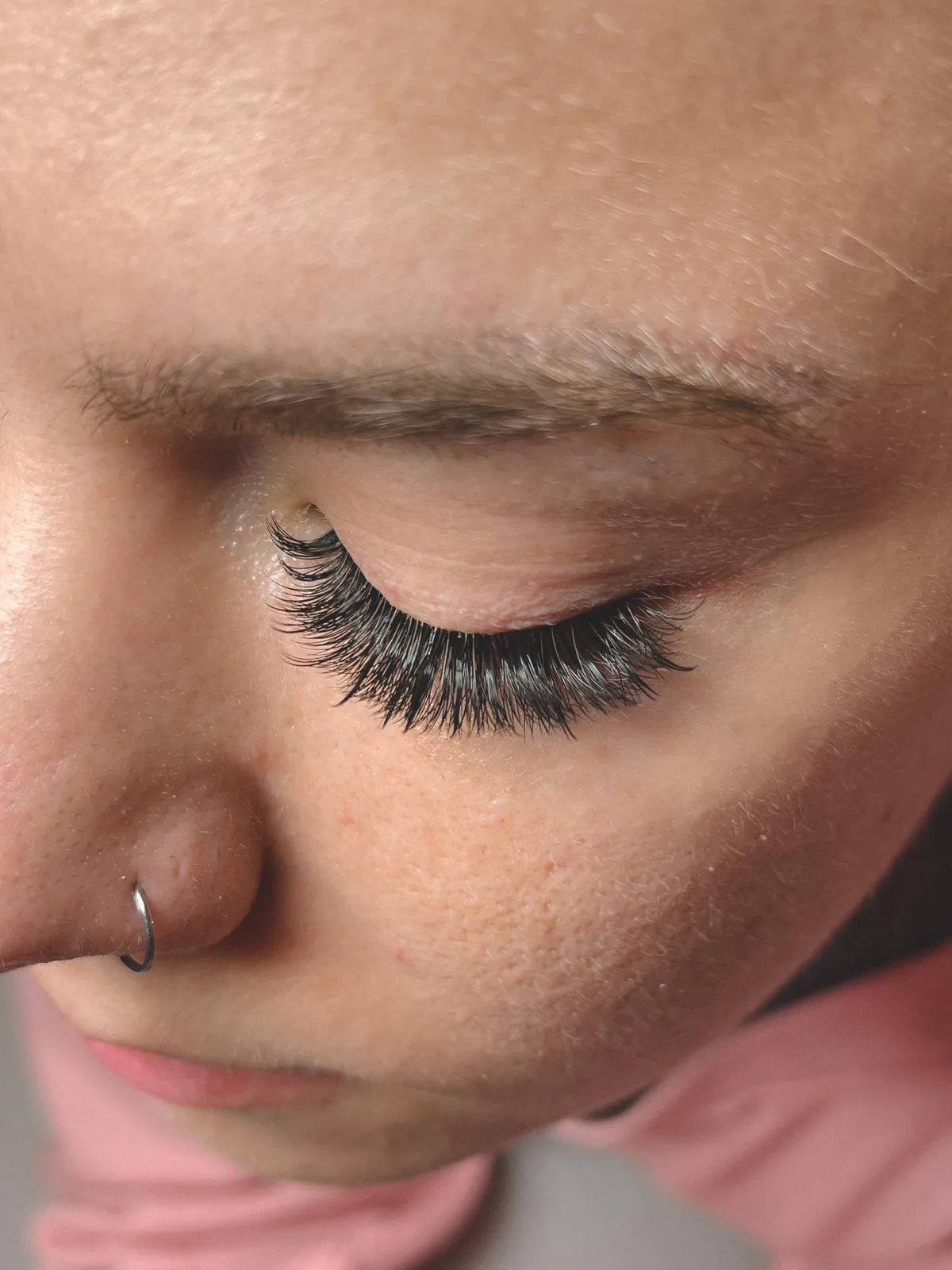
Gravesend · Avenue P · Brooklyn 11223
Lash extensions, allergies and sensitive eyes
Patch test on request, always · Russian & English
The short answer
Can you be allergic to lash extensions?
Yes — to the adhesive, not to the lashes themselves. Every lash adhesive is built on cyanoacrylate, and no lash adhesive is hypoallergenic, including the LED-cured one, whatever a salon tells you. Most of what clients call an allergy is actually irritation: both eyes feel scratchy during or just after the appointment and settle within a day. A true allergic reaction usually appears 24 to 72 hours later, with swollen lids and persistent itching, and it can develop after years of uneventful sets. If an eye is painful, swollen, weeping or your vision has changed, see a doctor — that is not a question for a lash studio, including this one.
First, the part that matters most
When to see a doctor rather than a lash artist.
We are a lash studio. We are not medical, we cannot diagnose anything, and we are not going to pretend otherwise to keep you in the chair. Go to a doctor or an eye clinic, not to us, if you have any of the following:
- Pain, as opposed to itching or a scratchy feeling.
- Swelling that is getting worse rather than settling, or swelling that closes the eye.
- Discharge — anything sticky, yellow or crusted.
- Any change in vision, blurring included.
- Light sensitivity, or a feeling that something is scratching the surface of the eye.
- Symptoms in one eye only that are getting worse. A reaction to adhesive is usually symmetrical; one bad eye is more often something mechanical or an infection.
What we can do in that situation is take the set off. Removal is $25, takes about twenty minutes, and we will fit you in the same day if you ask. Having the extensions removed does not treat anything — see someone who can — but it removes the variable, and it stops you pulling them off yourself at eleven at night, which is its own injury.
The useful distinction
Irritation or allergy?
These get confused constantly, and they lead to opposite decisions: irritation usually means adjust something, an allergy usually means stop. Neither table row is a diagnosis — it is what tends to be true.
| Irritation | Allergic reaction | |
|---|---|---|
| Cause | Adhesive fumes during the set, a lifted eye patch, tape pulling the lid, dry air, or an extension touching the lid. | An immune response, usually to cyanoacrylate in the adhesive. Occasionally to the tape, patches or tint rather than the glue. |
| Timing | During the appointment or within a few hours of it. | Typically 24 to 72 hours afterwards, and sometimes building over several sets. |
| What it feels like | Scratchy, watery, mildly red. Uncomfortable rather than distressing. | Persistent itching, puffy or visibly swollen lids, redness that does not settle. |
| How long | Settles within hours, a day at most. | Continues or worsens until the set comes off, and often for a while after. |
| One eye or both | Can be one, especially if a patch lifted on that side. | Almost always both. |
| What to do | Tell us. Often it is one misplaced extension or a patch that sat badly, and it is fixable. | See a doctor, and have the set removed. Do not book another set until you have an answer. |
| Can you keep wearing extensions? | Usually yes, with adjustments. | Often not. A sensitivity to acrylates does not go away because you changed salon. |
One honest caveat about that last row. A different adhesive sometimes helps, because formulations vary in how much cyanoacrylate they release and in what else is in them. But "we use a different glue" is not a solution to a confirmed acrylate allergy, and any studio promising you it is should worry you.
What is actually in there
Four things people blame on "the glue".
Narrowing it down matters, because three of these four are easy to change and one is not.
That last point is the only honest claim we will make for the LED-cured bond in this context: fewer fumes, not fewer allergens. It is still cyanoacrylate. It is still not hypoallergenic. If a studio sells it to you as the allergy-safe option, they are describing something that does not exist.
Patch testing
What it does, and what it cannot promise.
We patch test on request, always, and we would rather you asked than assumed. Here is the honest version of what it is worth.
- A few extensions are applied at the outer corner of one eye, or adhesive is placed behind the ear, and left for 24 to 48 hours.
- No reaction in that window means no reaction to that amount of that adhesive, on that day.
- That is genuinely useful information, and it is the reason to do it.
- It is not a guarantee. A full set is far more adhesive than a patch test, sensitisation can build over repeated exposure, and a negative test today does not rule out a reaction to your fourth set next spring.
Ask for one if you have ever reacted to lash adhesive, nail products, hair dye or medical tape, or if you simply want to be careful. It costs you two days of waiting and nothing else.
One client at a time, door closed
If you already have something going on
Contacts, dry eye, styes and lash mites.
None of this is medical advice and none of it replaces your own eye doctor. It is what we will say at the chair, which is sometimes "treat that first".
| Situation | Where we land |
|---|---|
| Contact lenses | Fine day to day. Take them out for the appointment — ninety minutes with your eyes closed in lenses is uncomfortable and less safe, so bring a case and solution or come in glasses. Afterwards, insert and remove them without dragging the lid up by the lashes. |
| Dry eye | Often workable, sometimes not. Extensions themselves do not cause dry eye, but a long appointment with the eyes closed and air moving over them can flare it, and heavier sets make some people blink differently. If you are being treated for it, ask your doctor before booking. |
| Blepharitis or lid inflammation | Treat it first. Extensions make thorough lid-margin cleaning harder at exactly the point where the problem lives, and applying a set over an inflamed lid margin tends to make both worse. We will decline until it is settled, and say why. |
| A stye or active infection | No, and not on either eye. Wait until it has fully resolved. This is one of the few flat refusals here. |
| Lash mites (demodex) | Demodex live on almost everyone at low numbers and only become a problem when they multiply, which poor lid hygiene encourages. Persistent itching at the lash base, crusting and recurring irritation are worth getting looked at. We are not going to diagnose it from a photo, and we would rather you cleared it with a professional before a new set. |
| Recent eye surgery or LASIK | Ask your surgeon for a timeframe and follow it rather than us. When they clear you, we will apply a set. |
| Hay fever season | Not a contraindication, but worth timing around. Rubbing itchy eyes through a pollen week is how a good set becomes a patchy one in ten days. |
Daily lid hygiene is the thread running through all of this. Most of the irritation people attribute to extensions is build-up of sebum and makeup at the lash line under a set that never gets cleaned. Lash shampoo daily, ninety seconds — the full routine is here.
Pregnancy and breastfeeding
Many clients do it. Ask your doctor first anyway.
We are not in a position to tell you whether a cosmetic procedure is right during your pregnancy, and we will not. What we can do is tell you the practical parts, so the conversation with your doctor is a short one.
- It is ninety minutes lying flat on your back. In the third trimester that is often the deciding factor rather than anything chemical. Tell us and we build in breaks and the option to sit up.
- Nothing is absorbed through the lash. The adhesive bonds to hair, not skin, and it is a tiny quantity — but the fumes are the part people ask about, and the LED-cured bond releases fewer of them.
- Hormonal changes alter the shed cycle. Retention is frequently shorter during pregnancy and in the months after birth. That is normal and it is not bad work; expect to refill at two weeks rather than three.
- Sensitivity can change. People who have worn extensions for years sometimes react differently while pregnant. A patch test is a reasonable precaution even if you have never needed one.
If your doctor says no or says wait, that is the answer, and we will hold the booking rather than argue with it.
Also asked
Age, and who we turn away.
We do not apply lash extensions to anyone who cannot consent for themselves, and for minors we need a parent or guardian present at the appointment. If you are booking for a teenager, text us first so there are no surprises at the door.
We also decline when the lash line cannot carry what has been asked for, when a lid is inflamed or infected, and when someone wants a set over work that has bonded natural lashes together. None of that is a judgement on you — it is the part of the job that protects your own lashes.
Keep reading
Related.
Questions
Safety, answered.
Can you be allergic to eyelash extension glue?
Yes. Every professional lash adhesive is cyanoacrylate-based and an immune response to acrylates is possible, including after years of uneventful sets. No lash adhesive is hypoallergenic, including LED-cured formulations. Reactions to the under-eye patches or the medical tape are also common and are frequently mistaken for a glue allergy.
What are the symptoms of an eyelash extension allergy?
Typically persistent itching, puffy or visibly swollen lids and redness that does not settle, appearing 24 to 72 hours after the appointment and affecting both eyes. That is different from irritation, which is scratchy and watery during or just after the set and settles within a day. If there is pain, worsening swelling, discharge or any change in vision, see a doctor rather than a lash studio.
Why do my eyes hurt after lash extensions?
Pain is not typical and is worth taking seriously. The common harmless causes are a lifted under-eye patch, tape pulling the lid, or a single extension touching the lid or the eye surface — all fixable in minutes, so tell us. The causes that are not for us are infection, a scratched cornea or an allergic reaction. Pain, discharge, worsening swelling, light sensitivity or changed vision mean a doctor, not a studio.
Does a patch test guarantee I will not react?
No, and anyone who tells you otherwise is overselling it. A patch test applies a few extensions or a little adhesive and waits 24 to 48 hours. No reaction means no reaction to that quantity on that day, which is useful. A full set is far more adhesive, sensitisation can build over repeated exposure, and a negative test does not rule out reacting to a later set. We patch test on request, always.
Can I get lash extensions while pregnant?
Many clients do, but ask your doctor first — we are not medical and will not advise on that. Practically: the appointment is ninety minutes lying flat, which is often the real obstacle in the third trimester; hormonal changes shorten retention, so expect to refill at two weeks rather than three; and sensitivity can change, so a patch test is reasonable even if you have never needed one. If your doctor says wait, we hold the booking.
Can I wear contact lenses with lash extensions?
Yes, day to day. Take them out for the appointment itself, because ninety minutes with your eyes closed in lenses is uncomfortable and less safe — bring a case and solution, or come in glasses. Afterwards, insert and remove them carefully and avoid dragging the lid upward by the lashes.
Can I get lash extensions with dry eye or blepharitis?
Dry eye is often workable but can flare during a long appointment, so check with your doctor if you are being treated for it. Blepharitis should be treated first: extensions make cleaning the lid margin harder at exactly the point where the problem lives, and applying a set over an inflamed margin tends to make both worse. An active stye or infection is a flat no until it has resolved.
Do lash extensions cause lash mites?
Demodex mites live on almost everyone at low numbers. Extensions do not introduce them, but a set that is never cleaned properly creates the build-up at the lash base that lets them multiply, which is why daily lash shampoo matters. Persistent itching at the base, crusting and recurring irritation should be looked at by a professional — we will not diagnose it from a photo, and we prefer it cleared before a new set.
Before you book
Tell usIf anything here applies to you.
DEEPINLASH — 1019 Avenue P, Suite 703, Gravesend, Brooklyn 11223. Text (646) 469-1009 in Russian or English with what happened last time, and we will tell you honestly whether to book, to patch test first, or to see a doctor before either.